

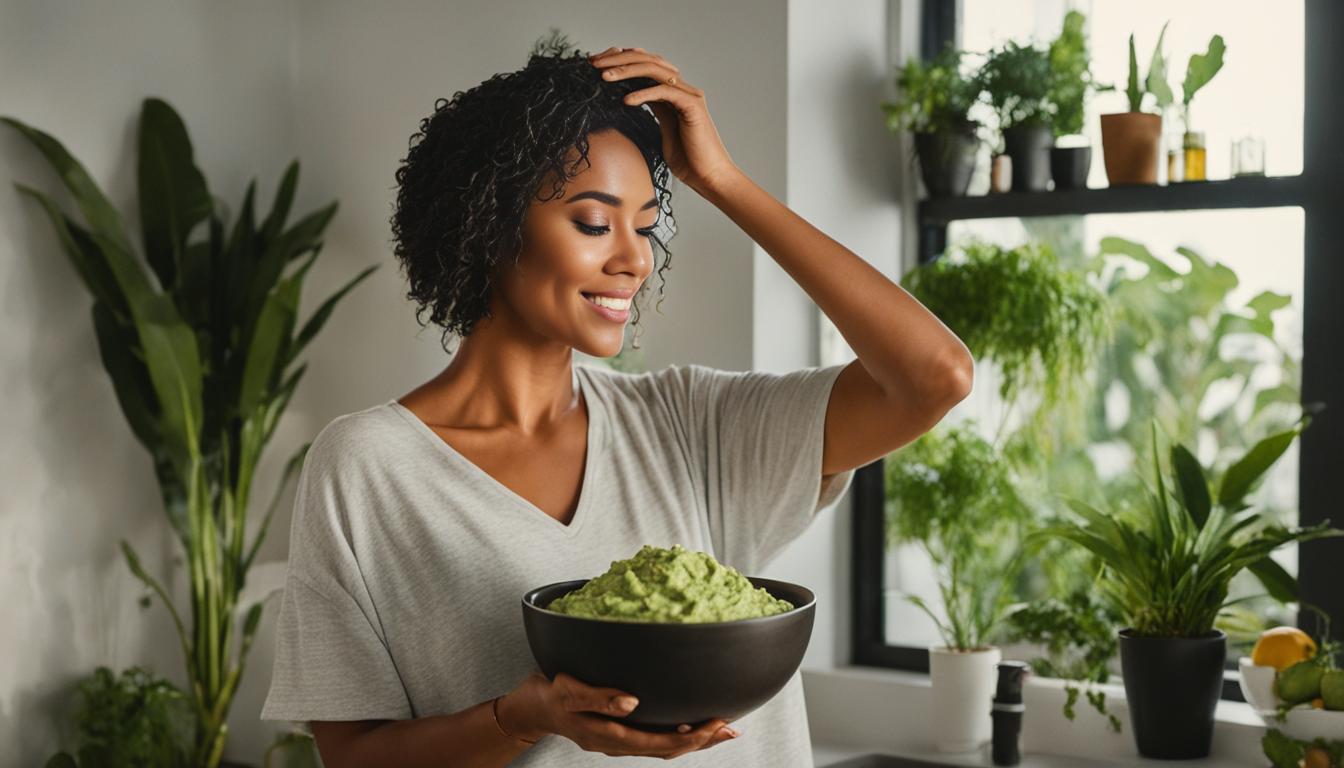
Hello, and welcome to my comprehensive guide on natural remedies for repairing damaged hair. If you’ve been struggling with dry, brittle, or split ends, you’re in the right place. I’m here to share with you effective hair repair remedies that harness the power of nature, allowing you to say goodbye to expensive salon treatments and hello to healthier, more lustrous hair.
Repairing damaged hair naturally is not only cost-effective but also a sustainable and gentle approach to hair care. By utilizing the healing properties of natural ingredients, you can rejuvenate your hair and restore its health. Let’s dive in and explore the world of natural hair repair!

Key Takeaways:
- Natural remedies offer effective solutions for repairing damaged hair.
- These remedies are a cost-effective alternative to salon treatments.
- Repairing damaged hair naturally is a sustainable and gentle approach.
- By harnessing the power of nature, you can rejuvenate and restore your hair’s health.
- Consistency is key in achieving long-term results with natural hair repair remedies.
Understanding Hair Damage and Its Causes
Before delving into the natural remedies for damaged hair repair, it’s essential to understand what causes hair damage. In this section, we’ll explore the science behind hair damage, including the effects of heat, chemicals, and environmental factors. We’ll also discuss common culprits that lead to damaged hair and provide you with signs to look out for that indicate your hair may be damaged.
The Science Behind Hair Damage
Hair damage is a complex phenomenon influenced by various factors. One of the primary culprits is excessive heat, such as using hot styling tools or subjecting your hair to high-temperature settings. Heat weakens the hair’s protein structure, leading to dryness, brittleness, and breakage. Chemical processes like coloring, perming, and straightening can also cause significant damage by altering the hair’s natural structure.
Environmental factors, including exposure to harsh sunlight, pollution, and chlorine, can strip the hair of its natural oils and moisture, making it more prone to damage. Additionally, brushing or styling your hair aggressively, using the wrong hair care products, and even wearing tight hairstyles that pull on the hair follicles can contribute to hair damage.
Common Culprits of Damaged Hair
- Excessive heat styling: Blow drying, straightening, and curling can damage the hair shaft, leading to dryness and breakage.
- Chemical processes: Coloring, perming, and relaxing treatments can weaken the hair and cause it to become brittle.
- Environmental factors: Exposure to UV rays, pollution, and chlorinated water can strip the hair of its natural protective layer, leaving it vulnerable to damage.
- Incorrect hair care routine: Using harsh chemicals, washing hair too frequently, or using the wrong products can contribute to damage.
- Tight hairstyles: Wearing ponytails, braids, or extensions that pull on the hair can lead to breakage and hair loss.
Signs Your Hair May Be Damaged
- Dry and brittle hair: If your hair feels rough, lacks shine, and breaks easily, it may be a sign of damage.
- Split ends: Split or frayed ends indicate that the hair shaft is weakened and requires repair.
- Excessive hair fall: Noticeable hair loss, particularly during brushing or showering, can signal damage to the hair follicles.
- Lack of elasticity: Healthy hair should stretch and bounce back, but damaged hair tends to be stiff and prone to breakage.
- Unmanageability: If your hair becomes difficult to style, tangles easily, or refuses to hold a curl or straighten, it may be damaged.
By understanding the causes of hair damage and recognizing the signs of damaged hair, you can take proactive steps to repair and restore your locks to their natural beauty and health.
Essential Oils and Their Restorative Properties
Essential oils are a powerful and natural solution for repairing damaged hair. These oils possess restorative properties that provide nourishment, hydration, and strength to your hair, promoting healthy growth and repair. Let’s explore the different types of essential oils and the specific benefits they offer for damaged hair.
Lavender oil: Lavender oil is renowned for its calming aroma and has been used for centuries to promote hair health. It moisturizes the scalp, reduces inflammation, and stimulates hair growth.
Rosemary oil: Rosemary oil is known for its ability to improve blood circulation in the scalp, which promotes hair growth. It also possesses antioxidant properties that help protect the hair follicles from damage.

Peppermint oil: Peppermint oil has a refreshing scent and a cooling effect on the scalp. It helps stimulate blood circulation, which promotes hair growth. This oil also has antimicrobial properties that can help maintain a healthy scalp.
Tea tree oil: Tea tree oil is well-known for its antifungal and antibacterial properties. It can help treat various scalp conditions, such as dandruff and fungal infections, which can contribute to hair damage.
Coconut oil: Coconut oil is one of the most versatile and widely used oils for hair care. It penetrates the hair shaft, moisturizes the scalp, and reduces protein loss, making it an excellent choice for repairing damaged hair.
Argan oil: Argan oil is rich in antioxidants, essential fatty acids, and vitamin E, making it highly beneficial for damaged hair. It deeply moisturizes and nourishes the hair, promoting shine and preventing further damage.
Jojoba oil: Jojoba oil closely resembles the natural oils produced by our scalp. It helps regulate sebum production, preventing excess oiliness or dryness. This oil also provides hydration and moisturization to the hair, promoting its health and elasticity.
“Essential oils have a long history of use in hair care and can be a game-changer for repairing damaged hair. By incorporating these natural oils into your hair care routine, you can help restore your hair’s health and achieve lustrous, healthy locks.”
Incorporating essential oils into your hair care regimen can provide you with effective and natural solutions for repairing damaged hair. Whether through scalp massages, hair masks, or adding a few drops to your shampoo or conditioner, these oils can enhance the health and appearance of your hair. Experiment with different oils and find the ones that work best for your hair type and specific needs.
| Essential Oil | Restorative Properties |
|---|---|
| Lavender oil | Moisturizes scalp, reduces inflammation, stimulates hair growth |
| Rosemary oil | Improves blood circulation, protects hair follicles |
| Peppermint oil | Refreshes scalp, stimulates blood circulation, antimicrobial properties |
| Tea tree oil | Antifungal and antibacterial properties, treats scalp conditions |
| Coconut oil | Deeply moisturizes, reduces protein loss |
| Argan oil | Nourishes, adds shine, prevents further damage |
| Jojoba oil | Regulates sebum production, hydrates, promotes hair health |
NATURAL REMEDIES FOR DAMAGED HAIR REPAIR
In this section, I will share with you the most effective natural remedies for repairing damaged hair. These remedies harness the power of nature’s ingredients to nourish and restore your hair, promoting its health and vitality.
Herbal Treatments That Nourish
Herbal treatments have been used for centuries to nourish and strengthen hair. These natural remedies provide essential nutrients and vitamins that repair and rejuvenate damaged strands. Here are some popular herbal treatments for hair repair:
- Aloe vera: Aloe vera gel is rich in enzymes and vitamins that promote hair growth and repair damaged hair follicles. Apply fresh aloe vera gel to your scalp and hair, leave it for 30 minutes, and then rinse thoroughly.
- Coconut oil: Coconut oil is a versatile remedy that contains fatty acids that penetrate the hair shaft, nourishing and repairing damaged hair. Apply warm coconut oil to your hair, focusing on the ends, and leave it overnight. Wash it out in the morning for smooth and shiny hair.
- Green tea: Green tea is packed with antioxidants that promote hair growth and repair damaged strands. Brew a strong cup of green tea and let it cool. Use it as a final rinse after shampooing to nourish and strengthen your hair.
Harnessing the Power of Proteins
Proteins play a vital role in repairing damaged hair and restoring its strength and elasticity. They help to rebuild and repair damaged hair shafts, making your hair more resilient. Here are some protein treatments for hair repair:
- Egg mask: Eggs are rich in proteins and can help repair damaged hair. Beat an egg and apply it to your hair, focusing on the ends. Leave it for 20 minutes and then rinse with cold water.
- Yogurt mask: Yogurt is another excellent source of proteins for repairing damaged hair. Mix plain yogurt with a few drops of honey and apply it to your hair. Leave it for 30 minutes and then rinse thoroughly.
- Avocado mask: Avocado is not only delicious but also a great source of proteins for your hair. Mash a ripe avocado and apply it to your hair, focusing on the ends. Leave it for 20 minutes and then rinse with water.
DIY Hair Masks for Different Hair Types
Everyone’s hair is unique, and different hair types require specific care. Here are some DIY hair mask recipes tailored for different hair types:
| Hair Type | DIY Hair Mask Recipe |
|---|---|
| Dry and damaged hair | Mix mashed banana, honey, and olive oil. Apply the mixture to your hair, leave it for 30 minutes, and then rinse. |
| Oily hair | Mix lemon juice and aloe vera gel. Apply the mixture to your hair, leave it for 20 minutes, and then rinse. |
| Curly hair | Mix mashed avocado and coconut milk. Apply the mixture to your hair, leave it for 30 minutes, and then rinse. |
| Fine and thin hair | Mix egg white, honey, and yogurt. Apply the mixture to your hair, leave it for 20 minutes, and then rinse. |
These DIY hair masks are easy to make and use ingredients that are readily available in your kitchen. Select the mask that suits your hair type and give your hair the nourishment it needs for repair and rejuvenation.
With these natural remedies, herbal treatments, harnessing the power of proteins, and DIY hair masks, you can effectively repair your damaged hair and restore its health and shine. Incorporate these remedies into your hair care routine, and enjoy the benefits of naturally beautiful and nourished hair.
The Role of Nutrition in Hair Health
Proper nutrition plays a vital role in maintaining the health of your hair. What you eat directly impacts the strength, growth, and overall condition of your hair. By following a hair-healthy diet and ensuring your body receives the essential nutrients it needs, you can nourish your hair from within and promote repair and growth.
To maintain healthy hair, it’s important to include a variety of nutrients in your diet. Here are some key nutrients that are beneficial for your hair:
- Vitamins: Vitamins A, B, C, D, and E are all important for hair health. Vitamin A helps in the production of sebum, which moisturizes the scalp. B vitamins, such as biotin and niacin, promote hair growth and prevent hair loss. Vitamin C is essential for collagen production, which strengthens hair strands. Vitamin D helps in the production of new hair follicles, while Vitamin E improves blood circulation to the scalp.
- Minerals: Minerals like iron, zinc, and selenium are essential for healthy hair growth. Iron ensures proper oxygenation of the hair follicles, zinc regulates the oil glands in the scalp, and selenium promotes healthy hair growth and prevents dandruff.
- Proteins: Hair is primarily made up of proteins, so it’s important to include adequate amounts of protein in your diet. Proteins provide the building blocks for hair growth and repair. Incorporate lean meats, fish, eggs, beans, and nuts into your meals to ensure sufficient protein intake.
- Omega-3 fatty acids: These healthy fats play a crucial role in hair health. They help nourish the hair follicles, reduce inflammation, and promote a healthy scalp. Include foods rich in omega-3 fatty acids, such as fatty fish, flaxseeds, chia seeds, and walnuts, in your diet.
In addition to incorporating these nutrients into your diet, there are some dietary tips you can follow to promote hair repair and growth:
- Eat a well-balanced diet: Include a variety of fruits, vegetables, whole grains, lean proteins, and healthy fats in your meals to ensure you’re getting a wide range of essential nutrients.
- Stay hydrated: Drink an adequate amount of water each day to keep your body and hair hydrated.
- Avoid crash diets and extreme weight loss: Rapid weight loss can lead to nutrient deficiencies, which can negatively impact hair health.
- Limit processed foods and sugary snacks: These can contribute to inflammation and nutrient deficiencies.
By focusing on nutrition and nourishing your hair from within, you can support its health and promote repair and growth. Remember, a balanced and hair-healthy diet is key to maintaining vibrant and beautiful hair.

Creating a Natural Hair Care Routine
Establishing a natural hair care routine is crucial for maintaining the health of your repaired hair. By following a consistent routine, you can ensure that your hair receives the necessary care and attention it needs to thrive. In this section, I’ll guide you through the steps of creating a natural hair care routine that will promote the repair and rejuvenation of your hair.
Step-by-Step Guide to a Scalp Massage
One of the key components of a natural hair care routine is a regular scalp massage. A scalp massage not only feels amazing but also helps to increase blood circulation to the hair follicles, promoting hair growth and repair. Here’s a step-by-step guide to performing a scalp massage:
- Start by applying a few drops of your favorite hair oil or serum to your fingertips.
- Using the pads of your fingers, gently press and massage your scalp in circular motions. Focus on areas where your hair may be thinning or experiencing damage.
- Continue massaging your scalp for at least 5 minutes to ensure thorough stimulation of the hair follicles.
- For added relaxation and benefits, consider using essential oils such as lavender or peppermint in your scalp massage oil. These oils have soothing and invigorating properties that can enhance the overall experience.
By incorporating a scalp massage into your natural hair care routine, you’ll not only promote hair repair but also indulge in a blissful self-care practice.
Detoxing Your Hair Care Arsenal
Detoxing your hair care products is another essential step in creating a natural hair care routine. Over time, product buildup, chemicals, and impurities can accumulate in your hair, resulting in dullness and damage. To detox your hair care arsenal, follow these simple steps:
- Start by examining the ingredients in your current hair care products. Look for harsh chemicals, sulfates, and synthetic fragrances that can be detrimental to your hair’s health.
- Replace these products with natural and organic alternatives. Look for gentle cleansers, sulfate-free shampoos, and nourishing conditioners that are free from harmful ingredients.
- Consider incorporating hair masks and treatments into your routine to further detoxify and nourish your hair.
By detoxing your hair care products, you’ll pave the way for healthier and more vibrant hair. Your hair will be free from the harmful effects of chemicals and pollutants, allowing it to thrive and repair naturally.
Regular Treatments for Ongoing Hair Care
As part of your natural hair care routine, it’s important to include regular treatments to maintain the health and vitality of your hair. Treatments can help in repairing damaged hair, adding moisture, and promoting growth. Here are some treatments to consider:
- Deep conditioning treatments: These treatments provide intense hydration to your hair, leaving it soft, smooth, and nourished. Look for natural hair masks or DIY options that contain ingredients like avocado, coconut oil, or honey.
- Protein treatments: Protein treatments help in strengthening and repairing damaged hair. Look for products that contain ingredients like keratin or collagen to restore your hair’s strength and resilience.
- Hot oil treatments: Hot oil treatments provide deep nourishment to your hair and scalp. Choose natural oils like argan oil, jojoba oil, or olive oil and apply them to your hair, leaving it for a specified duration before rinsing.
By incorporating regular treatments into your natural hair care routine, you’ll ensure that your hair receives the necessary care and attention it needs to stay strong, healthy, and beautiful.
With this step-by-step guide to creating a natural hair care routine, you’ll be well-equipped to care for and repair your hair using natural remedies. Remember, consistency is key, so make these practices a part of your daily or weekly routine to achieve the best results. Say goodbye to damaged hair and hello to luscious, healthy locks!
Conclusion
In conclusion, this natural remedies for damaged hair repair guide has provided you with a wealth of information and practical solutions for rejuvenating your hair. Throughout this guide, we have explored the science behind hair damage, identified common culprits that lead to damaged hair, and discussed the signs to look out for. We have also delved into the power of essential oils, herbal treatments, proteins, and DIY hair masks in repairing damaged hair.
Furthermore, we have highlighted the role of nutrition in hair health and the importance of adopting a hair-healthy diet. By nourishing your body with the right nutrients, you can promote hair repair and growth from within.
Lastly, we have emphasized the significance of creating a natural hair care routine that includes a scalp massage, detoxing your hair care products, and regular treatments. By incorporating these practices into your routine, you can maintain the health of your repaired hair and prevent further damage.
So, embrace these natural remedies for damaged hair and embark on your journey to beautiful, lustrous locks. Remember, consistency is key in achieving the desired results. Say farewell to damaged hair and welcome a healthier, more vibrant mane. Your hair deserves the best, and with the power of nature, you can achieve it!
FAQ
What are the best natural remedies for repairing damaged hair?
Some of the best natural remedies for repairing damaged hair include using essential oils, herbal treatments, and DIY hair masks. These remedies provide nourishment, hydration, and strength to your hair, promoting healthy growth and repair.
What causes hair damage?
Hair can become damaged due to various reasons, including excessive heat styling, chemical treatments, environmental factors, and poor hair care practices. Understanding the causes of hair damage can help you prevent further damage and repair existing issues.
How can I identify if my hair is damaged?
There are several signs that indicate your hair may be damaged, such as dryness, brittleness, split ends, frizz, and lack of shine. If your hair looks and feels unhealthy, it’s likely damaged and in need of repair.
What essential oils are beneficial for hair repair?
Essential oils like lavender, rosemary, and peppermint have restorative properties that can repair damaged hair. These oils provide nourishment and hydration to the hair follicles, promoting growth and strength.
How can I incorporate proteins into my hair repair routine?
Proteins are essential for repairing damaged hair. You can incorporate proteins into your routine by using protein-rich hair masks, conditioners, and treatments. These products help strengthen the hair shaft and replenish lost proteins.
Are there any DIY hair mask recipes for different hair types?
Yes, there are several DIY hair mask recipes for different hair types. For example, a banana and coconut oil mask is great for dry hair, while an egg and yogurt mask is ideal for oily hair. These masks use natural ingredients to nourish and repair specific hair types.
How does nutrition affect hair health?
Nutrition plays a vital role in hair health. A balanced diet rich in vitamins, minerals, and proteins provides the necessary nutrients for healthy hair growth and repair. Consuming foods like salmon, nuts, spinach, and eggs can nourish your hair from within.
How can I create a natural hair care routine?
To create a natural hair care routine, start by incorporating a scalp massage for improved circulation and hair growth. Detox your hair care arsenal by using natural and chemical-free products. Additionally, include regular treatments such as deep conditioning and hot oil treatments to maintain the health of your hair.
What are the final thoughts on this natural remedies for damaged hair repair guide?
In conclusion, this guide has provided you with a range of natural remedies and solutions for repairing damaged hair. By embracing these remedies and creating a consistent hair care routine, you can restore the health and vitality of your hair. Say goodbye to damaged hair and enjoy the journey to beautiful, nourished locks.





Leave a Reply