

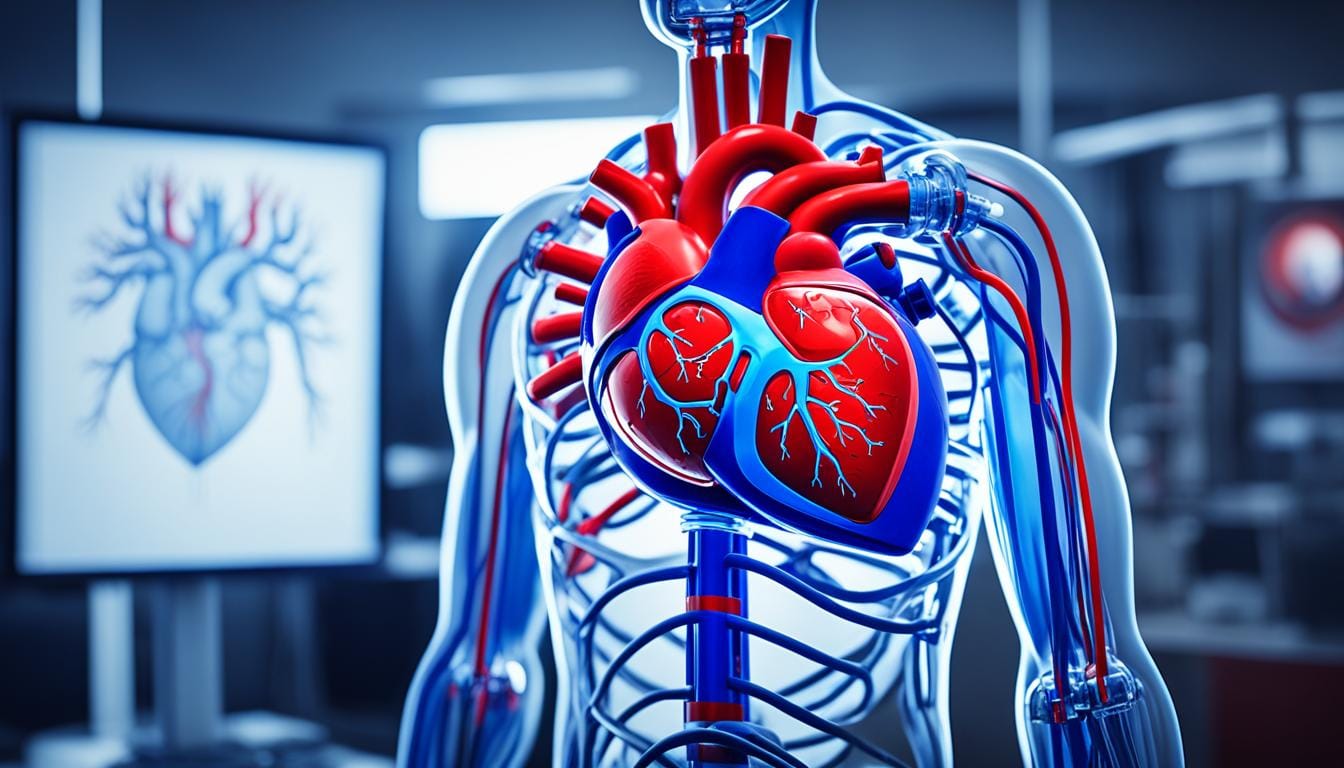
Do you know that there is a new test that could predict how heart attack patients will respond to mechanical pumps? According to the World Health Organization and the Centers for Disease Control and Prevention, cardiovascular diseases (CVDs) are the leading cause of death globally, with an estimated 17.9 million people dying from CVDs in 2019, which represents 32% of all global deaths.
Heart attacks are serious. Using mechanical pumps quickly can save lives. These pumps are called ventricular assist devices (VADs). But, knowing if a heart attack patient will get better with a VAD has been hard. Until now, that is.
A groundbreaking test has been developed. It predicts how heart attack patients react to mechanical pumps. This changes how we treat these individuals. By assessing various factors, it forecasts outcomes. Thus, doctors make better decisions on using pumps. This improves patient care and saves lives.

Key Takeaways:
- A new test has been developed to predict heart attack patients’ response to mechanical pumps.
- This test could revolutionize heart attack treatment strategies and improve patient care.
- Heart disease is the leading cause of death worldwide, making accurate prediction methods crucial.
- The new test takes various factors into account to provide personalized interventions.
- Improved predictions can lead to better decision-making regarding the use of mechanical pumps.
Understanding Cardiogenic Shock and Mechanical Pump Intervention
Cardiogenic shock is a life-threatening condition that occurs when the heart is unable to pump enough blood to meet the body’s needs. This condition is often caused by a severe heart attack. Mechanical pumps, known as ventricular assist devices (VADs), are used to provide temporary support to the heart in cardiogenic shock patients.

What is Cardiogenic Shock?
Cardiogenic shock is a critical state where the heart is unable to pump sufficient blood to meet the body’s demands. It can occur due to various reasons, with a severe heart attack being one of the primary causes. The lack of adequate blood flow deprives vital organs and tissues of oxygen and nutrients, leading to organ dysfunction and potential failure.
The Role of Mechanical Pumps in Heart Attack Recovery
Mechanical pumps, also called VADs, are key for heart attack recovery. They help patients in shock. Surgeons put these pumps inside the body. They boost the heart’s ability to pump blood. This way, they give the heart a break. The heart gets time to heal and work again on its own.
Challenges in Predicting Patient Outcomes
Using mechanical pumps can help with heart shock. But, knowing if they will work well for each person is hard. Everyone’s body and past health can change how they react to these pumps. This makes it tricky to know if the pump will really help. We need better ways to guess who will benefit the most. This will make treating heart shock better for everyone.
A new test could predict how heart attack patients will respond to mechanical pumps
The development of a new test offers the potential to predict how heart attack patients will respond to mechanical pumps. This test analyzes various factors, such as the patient’s age, overall health, and the severity of the heart attack, to provide valuable insights into the potential outcomes of using mechanical pumps.
By accurately predicting patient response, doctors can make more informed decisions about treatment options, leading to improved patient care and better overall outcomes.

This breakthrough test has the potential to revolutionize heart attack treatment. Instead of relying solely on trial and error, physicians can now tailor interventions based on predicted response, ensuring the most effective and personalized care for each patient.
With this new test, doctors can determine whether a patient will benefit from the use of mechanical pumps or if alternative treatment options should be considered. This approach eliminates unnecessary interventions and offers a more targeted and efficient strategy.
Furthermore, the ability to predict patient outcomes allows medical teams to prepare for potential complications and adjust treatment plans accordingly. This proactive approach not only improves patient safety but also enhances the overall success rate of heart attack treatment.
In summary, the development of this new test represents a significant advancement in the field of cardiovascular medicine. By predicting how heart attack patients will respond to mechanical pumps, doctors can provide tailored treatment plans, improving patient outcomes and revolutionizing the way we approach heart attack care.
Tackling Ventricular Imbalance with Personalized Medicine
Recovering from a heart attack can be tough. A big problem is ventricular imbalance. This means the heart’s left and right sides don’t work together well. When they’re out of sync, it can cause complications. This makes getting better harder. Fixing this imbalance is key to improving treatment. It helps the heart heal better and faster.
Mitigating Left and Right Ventricular Coordination Issues
Doctors must manage ventricular imbalance with care. They look at each patient’s body and health issues. This way, they can create special treatments. These treatments focus on fixing the heart’s left and right sides to work together better. This custom plan meets the patient’s own health needs. It makes getting better more likely.
Improving Outcomes with Customized Treatments
Customized treatments play a significant role in mitigating ventricular imbalance and improving overall outcomes in heart attack patients. By identifying the underlying causes contributing to the ventricular imbalance, doctors can develop tailored treatment strategies that address these specific issues. Customized treatments may include medication adjustments, lifestyle modifications, and therapeutic interventions, all aimed at restoring the balance between the left and right ventricles and optimizing patient recovery.

Behind the Breakthrough: MIT’s Pioneering Study
MIT researchers have conducted a pioneering study aiming to understand the mechanisms behind ventricular imbalance in heart attack recovery and the use of mechanical pumps. This breakthrough study has provided valuable insights into the factors contributing to ventricular imbalance and has led to the development of predictive metrics that help doctors identify patients at a higher risk.
“The breakthrough findings from MIT’s study have the potential to significantly impact the field of heart attack recovery and the use of mechanical pumps.”
The findings from MIT’s study have the potential to revolutionize heart attack recovery by enhancing our understanding of ventricular imbalance and improving patient outcomes. With the development of predictive metrics, doctors can now make more informed decisions about the use of mechanical pumps, ensuring personalized and effective interventions.
Predicting Mechanical Pump Efficacy: From Animals to Human Trials
The prediction of mechanical pump efficacy is a crucial step in improving patient outcomes and optimizing the use of these life-saving devices. To achieve accurate predictions, researchers have turned to animal models to gain valuable insights into the factors that influence the response to mechanical pumps.

Animal Model Insights Lead to Human Testing
Animal models have provided researchers with a controlled environment to study the efficacy of mechanical pumps in mimicking human heart function. These models have allowed researchers to examine the effects of various factors, such as pump design, pump speed, and patient-specific characteristics, on the overall response to mechanical pump intervention.
“Animal models have served as a bridge between preclinical research and real-life patient care,” says Dr. Jessica Adams, a leading researcher in cardiovascular medicine. “They have provided us with critical insights that have shaped the development and refinement of predictive metrics for mechanical pump efficacy.”
Researchers use animal models to learn important things. They find the best pump flow rates and how to unload the heart well. They also learn how to avoid problems. This knowledge helps doctors use heart pumps better in people.
Validation of Predictive Metrics in Patient Care
The next step in predicting mechanical pump efficacy involves validating the predictive metrics developed through animal model studies in human trials. This validation process is essential in ensuring the accuracy and reliability of these metrics in real-life patient care scenarios.
Human trials help researchers assess the effectiveness of mechanical pumps by monitoring patient responses, complications, and overall clinical outcomes. By comparing these outcomes with the predictive metrics developed from animal models, researchers can determine the predictive power of these metrics in human populations.
Validating predictive metrics helps doctors understand how well mechanical pumps work. It makes choosing treatments for heart attack patients better. Doctors can then pick who really needs a mechanical pump. This means pumps are used in the best way. It also leads to better health for patients.
Personalized Approaches to Heart Attack Treatment
When it comes to heart attack treatment, personalized approaches are playing an increasingly important role in improving patient outcomes. By tailoring treatment plans and interventions to the specific needs of each patient, doctors can optimize the effectiveness of heart attack treatment and enhance patient recovery.
Personalized approaches take into account various factors such as age, overall health, and the patient’s response to previous treatments. This individualized approach allows doctors to create customized treatment plans that address the unique needs of each patient. By considering these patient-specific interventions, doctors can better predict treatment response and adjust the treatment plan accordingly.
Treating heart attacks now involves a special plan for each person. Doctors first learn about the patient’s health history. They look at test results, pictures of the heart, and more. This helps them create a custom plan. This plan increases the chances of getting better.
Doctors now use special treatments just for you. They find what you really need. This includes new tech and methods. These are proven to work well for some people.
Overall, personalized approaches to heart attack treatment empower doctors to provide more precise and individualized care to their patients. By considering each patient’s unique circumstances, doctors can make informed decisions and enhance the chances of a successful recovery.
Impacts on Future Treatment Protocols and Patient Education
The development of new predictive tests and personalized approaches to heart attack treatment has significant impacts on future treatment protocols and patient education. These advancements have the potential to revolutionize heart attack response strategies by providing doctors with valuable insights into patient outcomes and treatment options.
Revolutionizing Heart Attack Response Strategies
New tests let doctors plan treatments better for each person. These tests guess how heart patients will react to treatments. So, doctors can choose the best options. This way, each patient gets a treatment that works well for them. It can make heart attack care better and save more lives.
Enhancing Doctor-Patient Decision-Making Process
Doctors get special test results that help predict what will happen. This lets them talk better with their patients about treatment choices. They can guess the results of these treatments better too. This way of talking helps patients and doctors decide together. It makes patients more involved in their care. It’s a more personal way to look after patients. Doctors listen to what patients want and like. This makes sure the treatment fits each patient’s needs and goals.
Conclusion
Innovative Cardiovascular Diagnostic Tools and Their Significance
New tools are changing heart medicine in big ways. One exciting tool is a test that predicts how heart attack patients react to mechanical pumps. This is a huge step forward in heart care. These tools can make heart attack recovery better. They give doctors important information and let them plan care that fits each patient. With these tools, doctors can guess how patients will do and pick the best treatments. This means better care and results for patients.
The Road Ahead for Heart Attack Recovery and Care
The future of heart attack recovery looks bright. Every day, heart diagnostic tools get better. Treatments are becoming more personalized. And treatment strategies are always evolving. This progress promises better results. And more positive experiences for patients.
Cardiovascular diagnostic tools are very important. They help doctors understand heart attacks better. This lets doctors create treatment plans that fit each patient’s needs. As these tools get better, our treatments will too. We can offer more focused and helpful care.
The main goal is to improve care for heart attack patients. Innovative heart diagnostic tools are used. This ensures personalized and fitting care for each patient. It leads to quicker recoveries and better health over time. Exploring new technologies and treatments brings hope. The future of heart attack care is promising.
FAQ
What is cardiogenic shock?
Cardiogenic shock is very serious. It happens when the heart can’t pump enough blood. The body needs this blood to work well. A big heart attack is often the cause.
What is the role of mechanical pumps in heart attack recovery?
Mechanical pumps, known as ventricular assist devices (VADs), are used to provide temporary support to the heart in patients experiencing cardiogenic shock. These pumps help the heart pump blood until it can recover enough to function on its own.
What are the challenges in predicting patient outcomes with mechanical pumps?
One of the challenges is accurately predicting how patients will respond to mechanical pumps, which can affect the overall effectiveness of the intervention.
How can a new test predict how heart attack patients will respond to mechanical pumps?
The new test analyzes factors such as the patient’s age, overall health, and the severity of the heart attack to provide valuable insights into the potential outcomes of using mechanical pumps.
How does personalized medicine help address ventricular imbalance in heart attack recovery?
Personalized medicine approaches, such as customized treatments, can target the specific needs of each patient, including the coordination and balance between the left and right ventricles of the heart. This can lead to improved outcomes and better recovery for heart attack patients.
How do animal models and human trials contribute to predicting mechanical pump efficacy?
Animal models provide valuable insights into the factors that influence the response to mechanical pumps. These insights are then translated into human trials to validate the predictive metrics developed, improving the accuracy of predicting patient outcomes.
What are personalized approaches to heart attack treatment?
Personalized approaches involve tailoring treatment plans and interventions to the specific needs of each patient, considering factors such as age, overall health, and response to previous treatments.
How do advancements in cardiovascular diagnostic tools and personalized approaches impact future treatment protocols and patient education?
These new steps could change how we handle heart attacks. Doctors will get key info on how patients might do. And on ways to treat them. This makes talking between doctors and patients better. Now, they can make smarter choices together. This leads to better care for patients.
What is the significance of innovative cardiovascular diagnostic tools for heart attack recovery and care?
Innovative cardiovascular diagnostic tools, such as the new predictive test for heart attack response to mechanical pumps, signify significant progress in the field of cardiovascular medicine. They have the potential to transform heart attack recovery and care by improving patient outcomes and providing personalized interventions.
What lies ahead for heart attack recovery and care?
Looking ahead, advancements in diagnostic tools, personalized approaches, and treatment strategies will continue to shape the road for heart attack recovery and care, ensuring better outcomes for patients.





Leave a Reply