

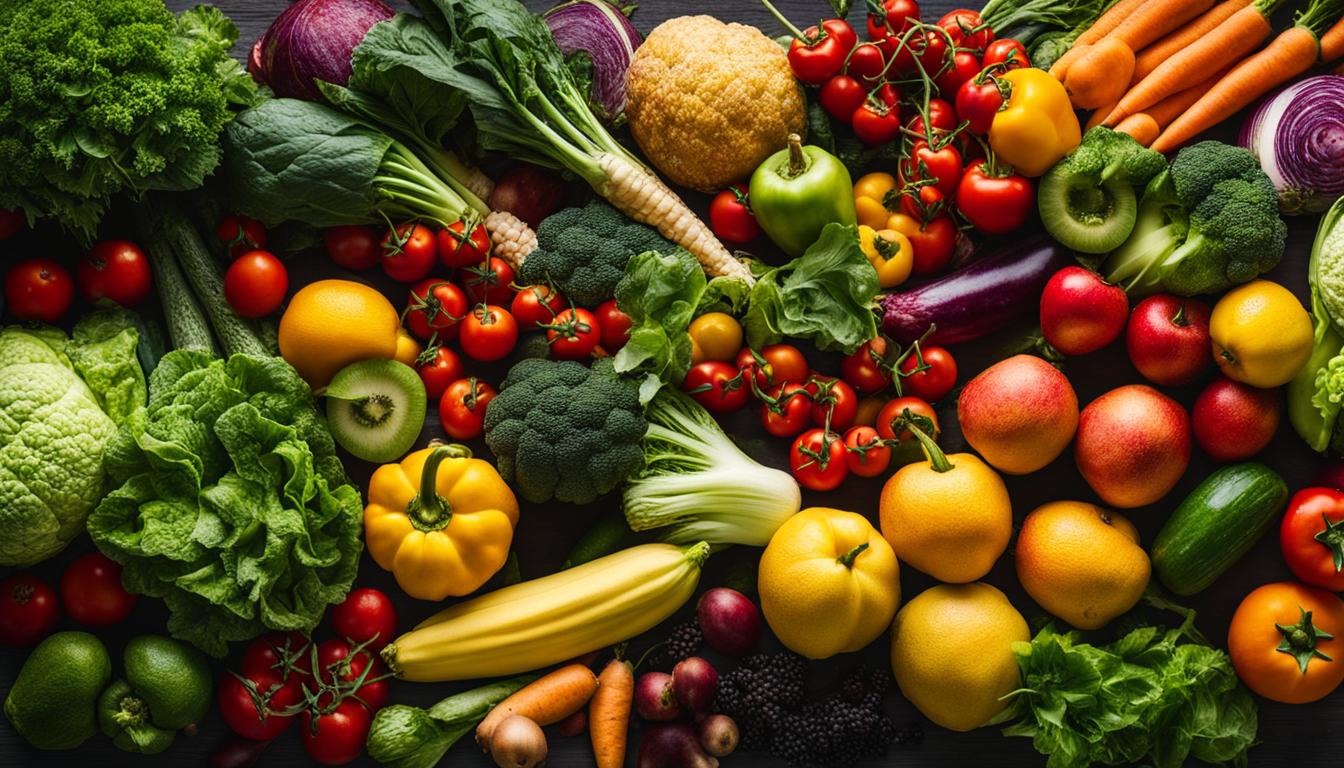
Are you ready to embark on a journey of health, vitality, and ethical eating? Look no further than the vegetarian diet! By embracing a plant-based eating lifestyle, you can nourish your body with nutrient-dense foods while making a positive impact on the environment. Whether you’re a seasoned vegetarian or just beginning to explore the benefits of a meat-free diet, this comprehensive guide will provide you with all the basics you need to know.
A study by the American Dietetic Association found that a well-planned vegetarian diet can provide numerous health benefits, including lower risk of heart disease, hypertension, and type 2 diabetes, while being rich in essential nutrients like fiber, vitamins C and E, and magnesium.

Key Takeaways:
- Vegetarian diets focus on plant-based foods and exclude meat, poultry, fish, and other animal products.
- A well-planned vegetarian meal plan can provide all the necessary nutrients for optimal health.
- Embracing a vegetarian lifestyle can have numerous health benefits and support ethical and environmental considerations.
- Crafting a balanced vegetarian diet involves incorporating a variety of whole grains, legumes, fruits, vegetables, nuts, and seeds.
- Experimenting with delicious vegetarian recipes can make your plant-based eating journey exciting and enjoyable.
Embracing a Vegetarian Lifestyle: Philosophy and Benefits
As individuals become more conscious about their health, the environment, and animal welfare, the popularity of vegetarianism continues to rise. Understanding the philosophy and benefits of vegetarianism can shed light on the reasons behind this lifestyle choice and the positive impact it can have on our well-being and the world around us.
Understanding Vegetarianism and Its Variants
Vegetarianism encompasses a range of dietary choices that prioritize plant-based eating while excluding or limiting the consumption of animal products. Here are some of the common variants:
Lacto-Ovo Vegetarianism: This variant includes dairy products (lacto) and eggs (ovo) in addition to plant-based foods.
Lacto-Vegetarianism: Lacto-vegetarians consume dairy products but exclude eggs and other animal-derived ingredients.
Ovo-Vegetarianism: Ovo-vegetarians include eggs in their diet but avoid other animal products such as meat, poultry, and dairy.
Veganism: Vegans follow a strict plant-based diet, excluding all animal products and by-products, including dairy, eggs, and honey.
Each variant has its unique philosophy and guidelines, providing individuals with the flexibility to choose a diet that aligns with their values and health goals.
Top Health Benefits of Being Vegetarian
Adopting a vegetarian lifestyle can bring about a multitude of health benefits. Here are some of the key advantages:
- Improved Heart Health: Vegetarian diets are typically low in saturated fats and cholesterol, which can help reduce the risk of heart disease and improve cardiovascular health.
- Lower Risk of Chronic Diseases: Vegetarian diets, when well-balanced, are associated with a reduced risk of conditions like obesity, type 2 diabetes, and certain types of cancer.
- Increased Intake of Nutrient-Rich Foods: Plant-based diets are abundant in vitamins, minerals, and dietary fiber, all of which support overall health and well-being.
- Weight Management: Vegetarian diets are often lower in calories and higher in fiber, which can aid in weight management and promote satiety.
Environmental and Ethical Considerations
Choosing a vegetarian lifestyle extends beyond personal health benefits. It also has positive implications for the environment and animal welfare. By reducing reliance on animal agriculture, vegetarianism helps conserve water, reduce greenhouse gas emissions, and minimize deforestation associated with livestock production. Additionally, a vegetarian diet aligns with ethical considerations by reducing the harm caused to animals in the food industry.

| Benefits of Being Vegetarian |
|---|
| Improved heart health |
| Lower risk of chronic diseases |
| Increased intake of nutrient-rich foods |
| Weight management |
| Positive environmental impact |
| Alignment with ethical considerations |
The Foundational Pillars of Vegetarian Nutrition
Macro and Micronutrients in a Vegetarian Diet
A well-planned vegetarian diet can provide all the necessary macronutrients (carbohydrates, proteins, and fats) and micronutrients (vitamins and minerals) required for optimal health. Vegetarianism is not synonymous with nutrient deficiency; in fact, plant-based foods are abundant in essential vitamins and minerals that contribute to overall well-being.
By incorporating a diverse range of vegetables, fruits, whole grains, legumes, nuts, and seeds into your vegetarian meal plan, you can ensure an adequate intake of essential nutrients. Plant-based sources of vitamins such as vitamin C, vitamin E, and folate, as well as minerals like iron and calcium, can be easily obtained from fruits, vegetables, whole grains, and fortified plant-based products.
In addition to the macronutrients and micronutrients provided by a vegetarian diet, it is important to pay attention to certain nutrients that may require extra consideration:
- Iron: While plant-based sources of iron are abundant, it is important to ensure adequate absorption by consuming iron-rich foods alongside foods high in vitamin C, which enhances iron absorption.
- Calcium: Dairy products are not the only source of calcium in a vegetarian diet. Incorporate calcium-rich foods such as fortified plant-based milks, tofu, leafy greens, and sesame seeds.
- Vitamin B12: As vitamin B12 naturally occurs primarily in animal products, it is important for vegetarians to ensure sufficient intake through fortified foods or supplements.
- Omega-3 fatty acids: Plant-based sources of omega-3 fatty acids, such as flaxseeds, chia seeds, and walnuts, can be incorporated into a vegetarian diet for their numerous health benefits.
Balancing Your Plate with Plant-Based Foods
Creating a well-balanced plate is essential for meeting your nutrient needs as a vegetarian. A simple approach is to divide your plate into three sections: one-third for protein-rich foods, one-third for whole grains or starchy vegetables, and the remaining one-third for non-starchy vegetables and fruits. This ensures a variety of nutrients and a balance between macronutrients.
Include a variety of colorful vegetables and fruits to provide ample vitamins, minerals, and antioxidants. Opt for whole grains like quinoa, brown rice, and whole wheat for fiber and complex carbohydrates. Incorporate protein-rich foods such as legumes (beans, lentils, chickpeas), tofu, tempeh, seitan, and edamame to meet your daily protein requirements.
Don’t forget to add healthy fats from sources like avocados, nuts, and seeds to your meals while being mindful of portion sizes. These fats are rich in essential fatty acids and contribute to the overall balance and satiety of your meals.
Vegetarian Protein Sources That Pack a Punch
Contrary to the misconception that vegetarians struggle to meet their protein requirements, there are numerous plant-based protein sources that pack a punch. These include:
- Legumes: Beans, lentils, chickpeas, and soy products like tofu, tempeh, and edamame are excellent sources of plant-based protein.
- Nuts and seeds: Almonds, walnuts, chia seeds, flaxseeds, hemp seeds, pumpkin seeds, and sunflower seeds are not only rich in protein but also provide a good amount of healthy fats.
- Whole grains: Quinoa, brown rice, amaranth, buckwheat, and oats are not only great sources of complex carbohydrates but also contribute to your protein intake.
- Dairy and eggs (for lacto-ovo vegetarians): Milk, yogurt, cheese, and eggs are high in protein and can be incorporated into a lacto-ovo vegetarian diet.
By incorporating a variety of these protein sources into your meals, you can easily meet your daily protein requirements on a vegetarian diet.

Vegetarian Diet: Crafting Your Daily Meal Plan
When it comes to following a vegetarian diet, crafting a well-planned and balanced meal plan is crucial for meeting your nutritional needs and achieving your goals. Whether you are looking to lose weight, improve your health, or adhere to ethical reasons, designing a vegetarian meal plan can help you stay on track and ensure you are getting the essential nutrients your body needs.
Start by setting specific goals for your vegetarian diet. For example, if you are aiming for weight loss, focus on incorporating more low-calorie, nutrient-dense foods into your meal plan. If your goal is improved health, emphasize whole grains, fruits, vegetables, and plant-based proteins rich in vitamins and minerals.
Planning your meals in advance is key to maintaining a well-rounded and satisfying vegetarian meal plan. Be sure to include a variety of foods from different food groups to ensure you are getting a wide range of nutrients. Incorporate whole grains, legumes, fruits, vegetables, nuts, and seeds into your meals to provide essential macronutrients and micronutrients.
Experimenting with new recipes and flavors is an exciting way to keep your vegetarian meals interesting and enjoyable. Try incorporating different cuisines and cooking techniques to spice up your meals. Adding herbs, spices, and other seasonings can enhance the taste and provide additional health benefits.
Remember to listen to your body and adjust your vegetarian meal plan accordingly. If you find that certain foods or ingredients don’t agree with you, replace them with alternatives that suit your taste and dietary preferences. Your meal plan should be flexible and adaptable to your lifestyle.
Meal | Food Group | Sample Foods |
|---|---|---|
| Breakfast | Grains | Oatmeal with fruits and nuts |
| Protein | Plant-based protein powder | |
| Smoothie made with spinach, almond milk, and chia seeds | ||
| Lunch | Legumes | Chickpea salad wrap with hummus and vegetables |
| Vegetables | Mixed green salad with avocado and cherry tomatoes | |
| Dinner | Grains | Quinoa stir-fry with tofu and mixed vegetables |
| Fruits | Grilled pineapple for dessert |
Remember, creating a vegetarian meal plan that suits your individual needs and preferences may require some trial and error. Don’t be afraid to explore new recipes, ingredients, and cooking methods to make your vegetarian journey a flavorful and fulfilling one.
Whipping Up Healthy Vegetarian Recipes in Your Kitchen
As you embrace the vegetarian lifestyle, learning to cook delicious and nutritious meals is essential. Your kitchen becomes a hub for creativity and experimentation, as you explore the vast world of vegetarian cooking. By incorporating essential ingredients and trying quick and flavorful recipes, you can make every meal enjoyable and satisfying.
Essential Ingredients for Vegetarian Cooking
Stocking up your pantry with staple ingredients is the key to successful vegetarian cooking. Here are some must-have items:
- Whole grains: Incorporate quinoa, brown rice, oats, and whole wheat pasta into your meals for fiber, protein, and essential nutrients.
- Dried herbs and spices: Boost the flavor of your dishes with options like basil, oregano, cumin, turmeric, and paprika.
- Canned beans: Keep a variety of beans like chickpeas, black beans, and lentils on hand for protein-packed and versatile meal options.
- Plant-based milk: Replace dairy milk with almond, soy, or oat milk when cooking or baking.
- Nutritional yeast: Add a cheesy flavor to your dishes and a dose of vitamin B12 with nutritional yeast.
By having these ingredients readily available, you’ll be able to whip up a variety of healthy and flavorful vegetarian dishes with ease.
Quick and Delicious Vegetarian Meal Ideas
When you’re short on time but still want a nourishing meal, try these quick and delicious vegetarian recipes:
- Vegetable stir-fry: Sauté a mix of colorful vegetables like bell peppers, broccoli, carrots, and snap peas with garlic, ginger, and soy sauce for a flavorful and nutritious meal.
- Caprese salad: Layer tomato, fresh mozzarella, and basil leaves, and drizzle with olive oil and balsamic vinegar for a refreshing and simple salad.
- Chickpea salad wrap: Mash chickpeas with avocado, lemon juice, and spices, then spread onto a whole wheat tortilla, and add lettuce, tomatoes, and cucumber for a satisfying and protein-rich wrap.
- Veggie tacos: Fill corn tortillas with sautéed peppers, onions, black beans, and your favorite toppings like salsa, guacamole, and cilantro for a quick and flavorful Mexican-inspired meal.
These recipes offer a balance of protein, fiber, and essential nutrients, making them perfect for a busy vegetarian lifestyle.
Adapting International Cuisines to a Vegetarian Diet
Indulging in international cuisines doesn’t have to mean sacrificing your vegetarian diet. With a few adaptations, you can enjoy the flavors from around the world while staying true to your plant-based lifestyle.
Here are some tips for adapting international cuisines to a vegetarian diet:
“Italian cuisine: Swap meat in pasta dishes with mushrooms, roasted vegetables, or plant-based protein alternatives like tofu or tempeh.”
“Indian cuisine: Embrace lentil and chickpea curries, vegetable biryanis, and delicious bread such as roti or naan for an authentic taste of India.”
“Mexican cuisine: Load up on a medley of grilled vegetables, refried beans, and avocado to create flavorful vegetarian tacos or enchiladas.”
With a little creativity and willingness to experiment, you can enjoy a world of diverse flavors while sticking to your vegetarian lifestyle.
Discovering healthy vegetarian recipes and honing your cooking skills will make your journey towards a plant-based diet even more enjoyable and fulfilling. So roll up your sleeves, stock up your pantry, and let your culinary adventures begin!
Conclusion
In conclusion, adopting a vegetarian diet can bring about a host of health benefits and contribute towards environmental sustainability and ethical considerations. By familiarizing myself with the principles of vegetarianism and prioritizing a well-balanced nutrition plan, I can fully reap the rewards of plant-based eating.
With a wide array of healthy vegetarian recipes to explore, I can indulge in a diverse and delicious culinary experience. By embracing the vegetarian lifestyle, not only am I promoting my own well-being, but also actively participating in the cultivation of a greener, more compassionate world.
So let’s unlock the power of plant-based eating and embark on this journey together. I am excited to savor the delectable and nourishing possibilities that the vegetarian diet has to offer. Join me in this endeavor and discover a world where nutrient-rich foods and sustainability go hand in hand.
FAQ
What is a vegetarian diet?
A vegetarian diet is centered around consuming plant-based foods and excludes the consumption of meat, poultry, fish, and other animal products.
What are the different variants of vegetarianism?
Vegetarianism comes in various forms, including lacto-ovo vegetarianism (including dairy and eggs), lacto-vegetarianism (including dairy), ovo-vegetarianism (including eggs), and veganism (excluding all animal products).
What are the health benefits of being vegetarian?
Being vegetarian can lead to improved health, including reduced risk of chronic diseases, lower body weight, improved heart health, and better management of diabetes.
How can a vegetarian diet provide all the necessary nutrients?
A well-planned vegetarian diet can provide all the necessary macronutrients (carbohydrates, proteins, and fats) and micronutrients (vitamins and minerals) required for optimal health.
How can I balance my plate with plant-based foods?
You can balance your plate by including a variety of plant-based foods such as whole grains, legumes, fruits, vegetables, nuts, and seeds in your meals.
What are some vegetarian protein sources?
Excellent vegetarian protein sources include tofu, tempeh, legumes (such as lentils, chickpeas, and beans), quinoa, nuts, and seeds.
How can I create a vegetarian meal plan?
Start by setting specific goals for your vegetarian diet and plan your meals in advance, ensuring a balance of macronutrients and incorporating a variety of foods.
What are some essential ingredients for vegetarian cooking?
Essential ingredients for vegetarian cooking include whole grains, dried herbs and spices, canned beans, plant-based milk, and nutritional yeast.
Are there quick and delicious vegetarian meal ideas?
Yes! There are plenty of quick and delicious vegetarian meal ideas, such as vegetable stir-fry, quinoa salad, chickpea curry, and roasted vegetable pasta.
How can I adapt international cuisines to a vegetarian diet?
You can adapt international cuisines by substituting meat with plant-based alternatives, incorporating more vegetables, and experimenting with different spices and flavors.





Leave a Reply